Research · Pre-Clinical

Pre-Clinical Research

Three years of in vitro and in vivo investigation examining antioxidant activity, anxiety-related behaviour, seizure response and preliminary safety.

Pre-clinical research established the scientific foundation for investigating Bacosane® in cognitive health, neuronal protection and stress management. Over three years, Bacosane® was evaluated throughin vitro assays and animal models. These findings provide mechanistic and safety data that can inform future human clinical research.

Anticonvulsant Activity

Albino rats and mice — MES and PTZ models
Saponin, a key compound in Bacosane®, offers seizure protection by enhancing GABA production, modulating neurotransmitter activity, and inhibiting sodium channels—effectively improving brain function and reversing epilepsy-related changes.
Saponin, a key compound in Bacosane®, offers seizure protection by enhancing GABA production, modulating neurotransmitter activity, and inhibiting sodium channels—effectively improving brain function and reversing epilepsy-related changes.
Objective
Investigate whether Bacosane® could influence experimentally induced seizure activity and provide protection against convulsions.
Method
Bacosane® at 50 mg/kg and 100 mg/kg, with phenytoin 25 mg/kg as the standard comparator. Researchers measured seizure phases, convulsion onset, recovery and survival.
Findings
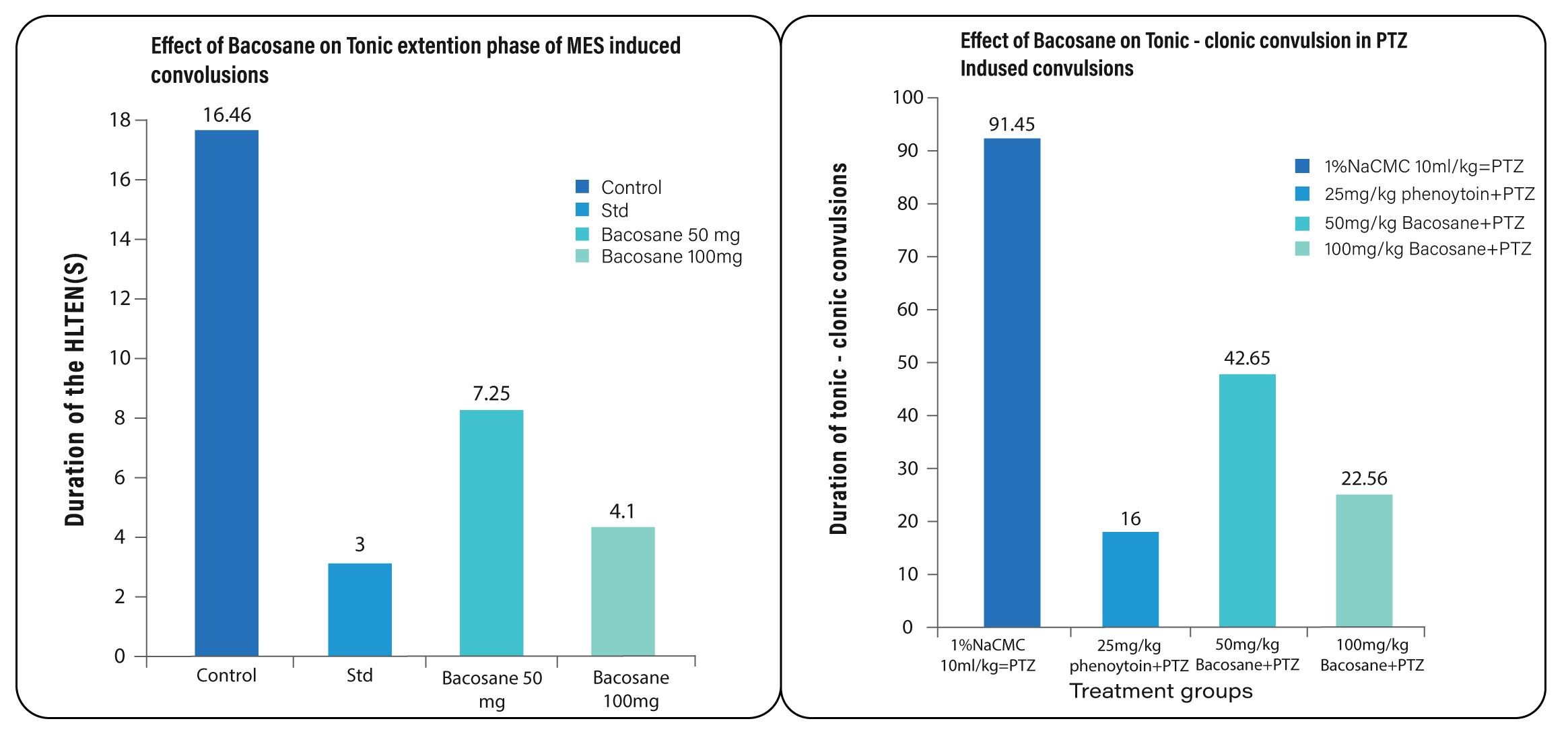
In the MES model, Bacosane® reduced flexion, extension, clonus and stupor duration versus control, more strongly at 100 mg/kg. In PTZ, Bacosane® produced 67% protection at 50 mg/kg and 84% protection at 100 mg/kg (phenytoin: 100%).
Relevance
Saponin, a key compound in Bacosane®, offers seizure protection by enhancing GABA production, modulating neurotransmitter activity, and inhibiting sodium channels—effectively improving brain function and reversing epilepsy-related changes.
Anxiolytic Activity [Effects of Bacosane® on Actophotometer method]

Male and female Wistar rats — Actophotometer test

Effects of Bacosane® on Actophotometer method: Dose-dependent reduction in anxiety-related locomotor scores in male and female Wistar rats.

Effects of Bacosane® on Actophotometer method: Dose-dependent reduction in anxiety-related locomotor scores in male and female Wistar rats.

Objective
Evaluate Bacosane®'s effect on behavioural measures of anxiety, exploration and locomotor activity using the actophotometer model.
Method
Bacosane® administered at 50 mg/kg and 100 mg/kg compared against vehicle control and standard diazepam (1 mg/kg) in male and female Wistar rats.
Findings
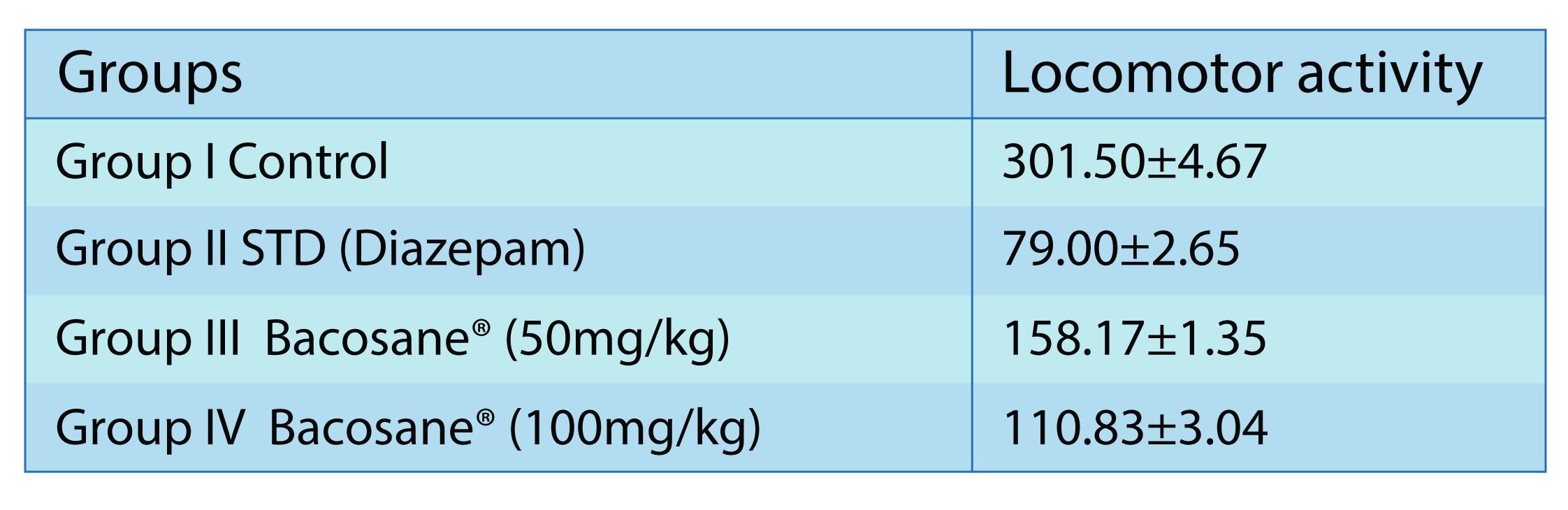
The anxiolytic effect of Bacosane® was evaluated using the Actophotometer in both male and female Wistar rats, where it significantly reduced immobility time and demonstrated strong, dose-dependent anti-anxiety effects (activity fell from 301.50 → 158.17 → 110.83; diazepam 79.00).
Relevance
Demonstrates strong, dose-dependent anti-anxiety effects in behavioural rodent models.

Anxiolytic Activity [Bacosane® and diazepam on behavior of rats in Elevated Plus Maze test (n=6)]

Male and female Wistar rats (n=6 per group) — Elevated Plus Maze (EPM)

Bacosane® and diazepam on behavior of rats in Elevated Plus Maze test (n=6): Bacosane® demonstrated strong, dose-dependent anxiolytic effects in both male and female Wistar rats by significantly reducing immobility time in the Elevated Plus Maze test.

Bacosane® and diazepam on behavior of rats in Elevated Plus Maze test (n=6): Bacosane® demonstrated strong, dose-dependent anxiolytic effects in both male and female Wistar rats by significantly reducing immobility time in the Elevated Plus Maze test.

Objective
Evaluate the effects of Bacosane® and standard reference diazepam on open-arm exploration and anxiety behaviour in rats.
Method
Bacosane® at 50 and 100 mg/kg with diazepam 1 mg/kg as reference; n=6 per group in the Elevated Plus Maze test.
Findings
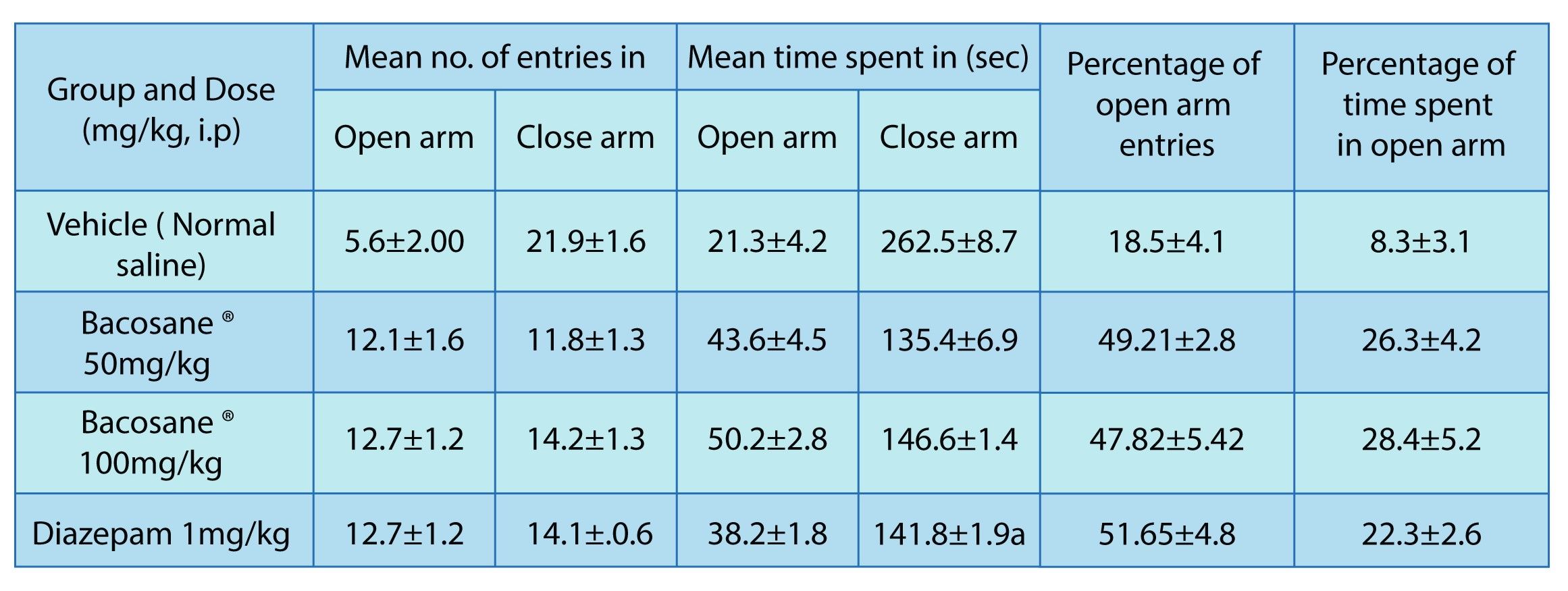
Bacosane® demonstrated strong, dose-dependent anxiolytic effects in both male and female Wistar rats by significantly reducing immobility time in the Elevated Plus Maze test. Open-arm entries increased from 18.5% (vehicle) to 49.21% (50 mg/kg) and 47.82% (100 mg/kg). Time in open arms rose from 8.3% to 26.3% and 28.4%.
Relevance
Combined results indicate dose-responsive anxiolytic activity in animal models; provides preclinical rationale for stress-resilience applications.

In Vitro Antioxidant Activity

DPPH free-radical scavenging assay

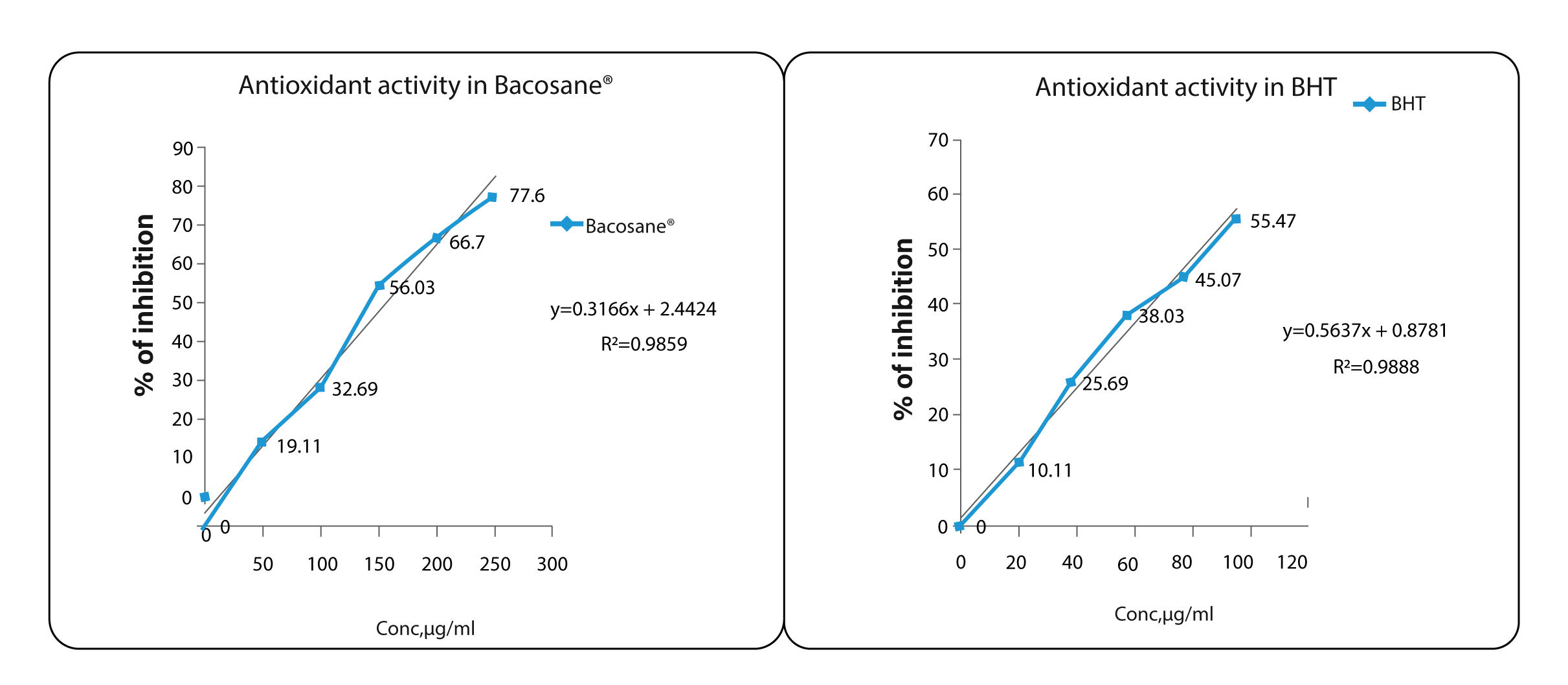
In-vitro antioxidant activity (DPPH assay): Bacosane® demonstrated strong antioxidant activity with an IC50 of 150.50 µg/ml, compared to 87.25 µg/ml for standard BHT.

In-vitro antioxidant activity (DPPH assay): Bacosane® demonstrated strong antioxidant activity with an IC50 of 150.50 µg/ml, compared to 87.25 µg/ml for standard BHT.

Objective
Determine the antioxidant capacity and free-radical scavenging potential of standardized Bacosane® under laboratory conditions.
Method
DPPH assay evaluated across concentrations with BHT (butylated hydroxytoluene) as reference antioxidant.
Findings
Bacosane® demonstrated strong antioxidant activity with an IC50 of 150.50 µg/ml, compared to 87.25 µg/ml for standard BHT. Bacosane® and its bioactive compounds have also been extensively studied for reducing oxidative stress by boosting antioxidant enzymes like SOD, CAT, GPX, and GSR.
Relevance
Provides a mechanistic basis for neuronal protection against oxidative stress and membrane lipid peroxidation.

Acute and Sub Acute Toxicity Study

Albino rats — Acute oral toxicity (5,000 mg/kg) & 28-day sub-acute (up to 1,000 mg/kg/day)

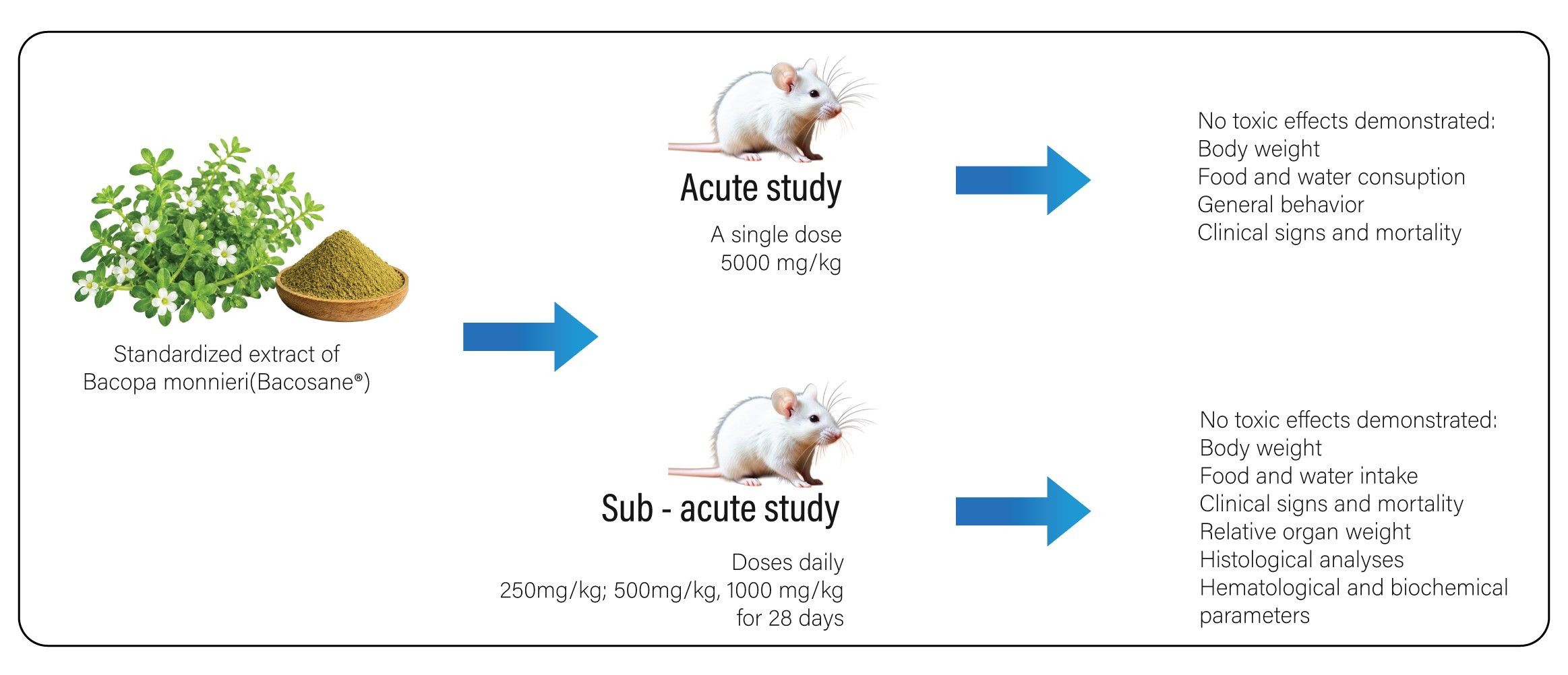
Acute and sub-acute toxicity study: The acute and sub acute toxicity of Bacosane® were evaluated by using albino rats. There was no significant difference (p > 0.05) observed in the relative organs, body weights, hematological, biochemical parameters, and gross abnormalities, compared to the control.

Acute and sub-acute toxicity study: The acute and sub acute toxicity of Bacosane® were evaluated by using albino rats. There was no significant difference (p > 0.05) observed in the relative organs, body weights, hematological, biochemical parameters, and gross abnormalities, compared to the control.

Objective
Evaluate preliminary safety following single-dose (acute) and 28-day repeated oral administration in albino rats.
Method
Acute: 5,000 mg/kg single oral dose. Sub-acute: 28 days at 250, 500 and 1,000 mg/kg/day. Monitored mortality, toxicity signs, body weight, organ weights, haematology, biochemistry and gross abnormalities.
Findings
The acute and sub acute toxicity of Bacosane® were evaluated by using albino rats. There was no significant difference (p > 0.05) observed in the relative organs, body weights, hematological, biochemical parameters, and gross abnormalities, compared to the control. No mortality or apparent toxicity reported.
Relevance
Favourable preliminary safety profile in experimental animals with no adverse effects observed at the highest tested doses.

In-silico Molecular Docking

Computational binding-affinity study

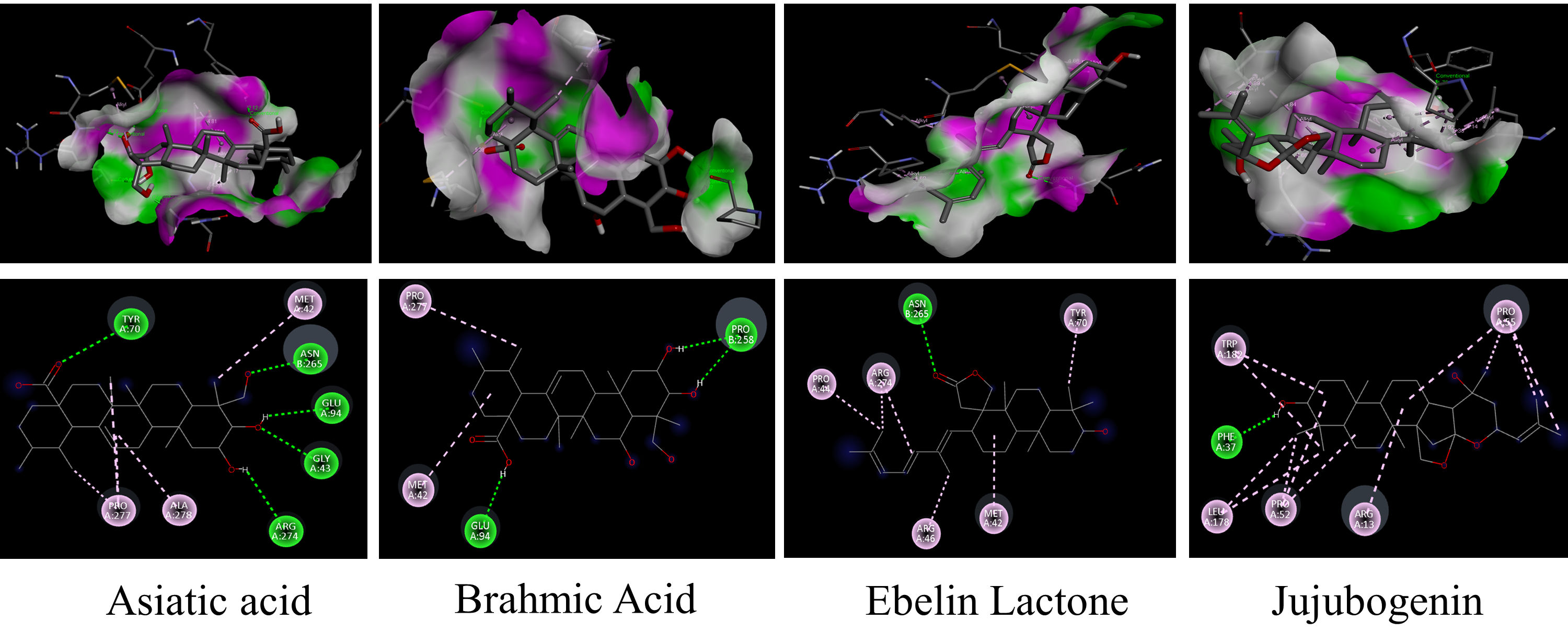
Molecular docking results showing binding affinities for Jujubogenin (−8.25 kcal/mol), ebelin lactone (−8.16 kcal/mol) and diazepam (−7.98 kcal/mol). Lower (more negative) binding-energy values indicate stronger predicted binding.

Molecular docking results showing binding affinities for Jujubogenin (−8.25 kcal/mol), ebelin lactone (−8.16 kcal/mol) and diazepam (−7.98 kcal/mol). Lower (more negative) binding-energy values indicate stronger predicted binding.

Objective
Assess the binding affinity of selected Bacosane® compounds against a target associated with anxiolytic activity, using molecular docking.
Method
Molecular docking of Jujubogenin, ebelin lactone and the reference standard diazepam.
Findings
Jujubogenin showed the highest binding affinity (−8.25 kcal/mol), followed by ebelin lactone (−8.16 kcal/mol) and diazepam (−7.98 kcal/mol). The two Bacosane® compounds exceeded the binding energy of the standard anxiolytic reference.
Relevance
These in-silico findings provide a computational basis for continued preclinical investigation and validate target interaction potential.
Summary

Key pre-clinical findings

  • • Dose-responsive activity in MES and PTZ anticonvulsant models (67% and 84% protection).
  • • Multiple behavioural models (Actophotometer & Elevated Plus Maze) indicated anxiolytic effects at 50–100 mg/kg.
  • • Measurable free-radical scavenging Activity in the DPPH assay (IC50 150.50 µg/mL).
  • • No mortality or significant therapy-related abnormalities (p > 0.05) in acute (5,000 mg/kg) or 28-day sub-acute studies.

Access the full Bacosane® pre-clinical dossier

Request detailed in vitro and animal-study data covering antioxidant, anxiolytic, anticonvulsant and safety findings.